Prototype Ocean Monitoring Sensors Show Revolutionary Potential

The EC-funded COMMON SENSE project is successfully developing prototypes for innovative, next generation sensing technologies that will support the protection of the marine environment in Europe. Progress on the development of these sensors, which will contribute to the implementation of the Marine Strategy Framework Directive (MSFD) by enabling effective monitoring of our marine waters, was presented at the project’s recent partner meeting held in Terrassa, Spain, from 22-23 April 2015.

The meeting, hosted by the project’s coordinating institute, LEITAT Technological Center, brought the COMMON SENSE consortium together to discuss the progress of the project and to decide on future actions as the project approaches its halfway point. 

The advances made in the development of the sensors include interesting results such as those arising from testing by project partner CSIC’s Centre of Nanotechnology and Molecular Materials (NANOMOL) group of a prototype thermometer for highly sensitive detection of temperature changes. Performance tests carried out with the first prototype have shown that the sensitivity of the developed thermometer is two orders of magnitude higher than that of the commercially used platinum thermometer.

Another interesting development, courtesy of project partner DropSens, is the development of screen-printed technology that can be used to fabricate miniaturised, inexpensive sensors to detect heavy metals. These sensors show fast responses, require low maintenance, and can be used for onsite measurements. They are currently undergoing validation and optimisation with CSIC’s Nanoparticles and Nanocomposites (NAPCOM) group.

Sensors being developed by the COMMON SENSE project will increase the availability of standardised data on: eutrophication; concentrations of heavy metals; micro plastic fraction within marine litter; underwater noise; and other parameters such as temperature, pH and pressure. These cost-effective sensors directly respond to current marine monitoring challenges and will be a key tool for EU Member States in meeting their MSFD requirements and achieving Good Environmental Status (GES).

Sergio Martinez, COMMON SENSE Scientific Coordinator, said: “As we approach the midpoint of the project it is timely to reflect on the progress of COMMON SENSE and how we as a partnership can ensure the project goals are successfully achieved. It was gratifying to see the developments presented at this meeting and the energy and enthusiasm of the participants to meet COMMON SENSE targets. The next 22 months promise to be intense, given the challenge posed by developing and deploying sensors in real environments. Of course, the difficulties during this phase, which are always to be expected when conducting research in marine environments, will be complemented by excitement. Hopefully COMMON SENSE will contribute to a new, revolutionary way of monitoring our oceans.”

During the meeting, partners reviewed and evaluated the progress of each of the project’s activities. The partners also discussed how to maximise effective collaboration and knowledge sharing with other EC-funded projects with a similar focus on marine environmental monitoring, in particular with the SCHeMA, NeXOS and SenseOCEAN projects.

For further information about COMMON SENSE, please contact COMMON SENSE Scientific Coordinator Sergio Martinez (smartineznavas@leitat.org)
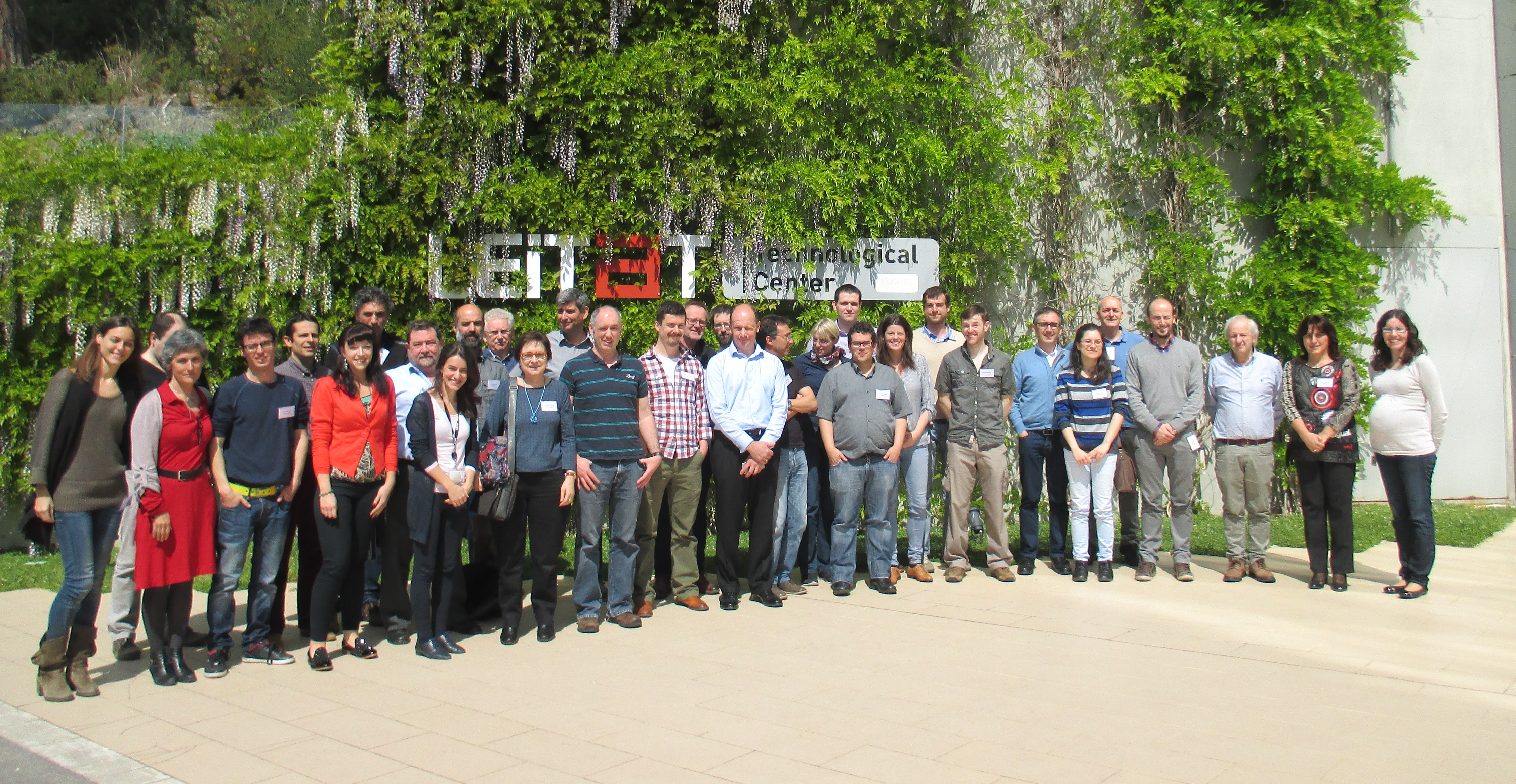
Consortium Pic 2 cropped

Photo Caption: Members of the COMMON SENSE consortium at the project’s partner meeting in April 2015 in Terrassa, Spain.


Exciting progress discussed at COMMON SENSE Partner Meeting

The COMMON SENSE project’s 18 month partner meeting was held in Terrassa, Spain, from 22-23 April 2015. The meeting, hosted by the project’s coordinator Leitat Technological Centre, brought the COMMON SENSE consortium together to discuss the progress of the project and to decide on future actions as the project approaches its mid-point.

COMMON SENSE is developing innovative, cost-effective sensors that will increase the availability of standardised data on: eutrophication; concentrations of heavy metals; microplastic fraction within marine litter; underwater noise; and other parameters such as temperature and pressure. These next generation sensing technologies will support the effective implementation of the Marine Strategy Framework Directive (MSFD) by enabling effective monitoring of our waters and so contribute to the protection of the marine environment in Europe.

The progress of the development of these sensors was presented at the meeting and included interesting results such as a prototype for a new high performance organic and flexible sensor for the highly sensitive detection of temperature changes on aqueous media. Sensor performance tests carried out with the first prototype developed by project partner NANOMOL have shown that the sensitivity of the developed thermometer is two orders of magnitude higher than that of the commercially used Platinum thermometer in the room temperature region.

During the meeting, partners engaged in an extensive review meeting where the progress of each of the project’s work packages was presented and evaluated in order to ensure good project development, the achievement of project objectives, and the successful delivery of project results. The partners also discussed how to maximise effective collaboration and knowledge sharing with fellow projects funded under ‘The Ocean of Tomorrow’ call. Synergistic opportunities for deployment and testing of sensors were also considered.

The COMMON SENSE consortium comprises six SMEs, five research development institutes, three universities and one foundation. The consortium’s expertise and geographical distribution will enable multidisciplinary marine environmental monitoring of key marine regions, including the Baltic Sea, the north-east Atlantic Ocean and the Mediterranean Sea.

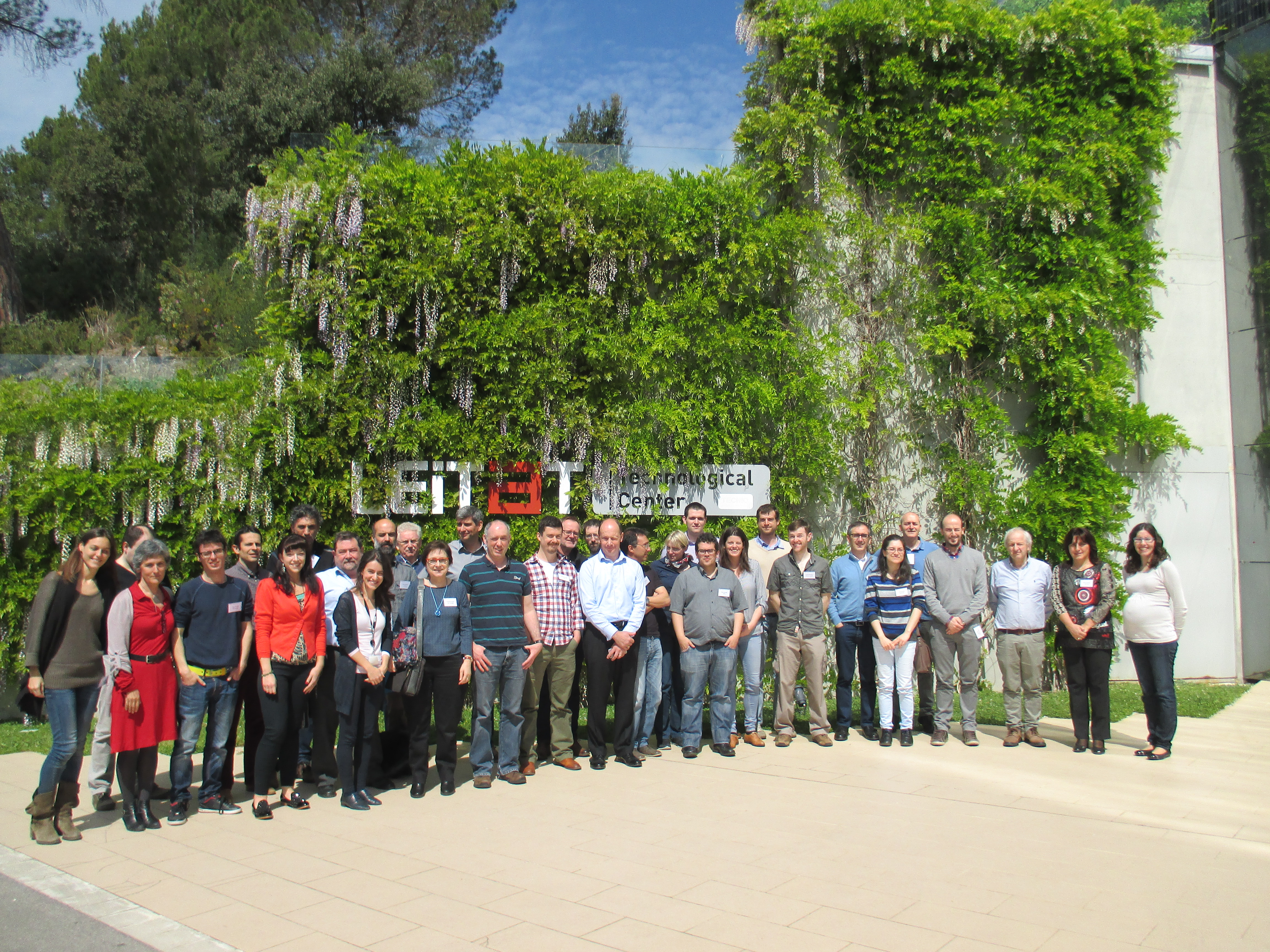
 Consortium Pic 2        The COMMON SENSE Partners at their 18 Month Meeting in Terrassa, Spain, April 2015.


EU survey on Earth observation in a global context

The European Commission has launched a public online consultation (EU survey) on Earth observation in a global context, GEO & GEOSS. Through this EU public consultation, the European Commission is actively seeking contributions by all those in Europe interested in the global context of Earth observation in order to help:

  • estimate general awareness of and stance on Earth observations (EO), GEO and GEOSS;
  • appreciate how to maximize EU benefits from an increased Earth observation coordination through GEO;
  • collect views on a set of possible actions at EU level in the field of global Earth observation and GEO


Contributions are requested before 20th of April. Further information and the survey itself are available here.


Abstract Submission Open for Blue Photonics 4

The 4th EOS Topical Meeting on Blue Photonics® - Optics in the Sea (Blue Photonics 4), to be held at the Institute of Marine Sciences (ICM, CSIC), Barcelona, Spain on the11th-13th May 2015, will provide a major international forum for the discussion of marine optics, underwater imaging systems and its applications. Its aims are to review recent progress in the field, to promote the formation of a community of scientists and engineers working in related areas, and to stimulate the interdisciplinary collaboration required to meet the rapidly developing challenges of the future.


Topics Include:

  • Environmental Monitoring
  • New low-cost technologies
  • Ocean Colour
  • Radiative Transfer and Modelling
  • Marine Bio-optics and Remote Sensing
  • Fluorometry
  • AOP - IOP 2D and 3D
  • Underwater Imaging
  • Innovative Sub-sea Optical Techniques and Instrumentation

Abstract submission is open until 6 February 2015

Detailed information on the programme and online registration is available on the conference website.

Dutch call on EU to act on Microplastics

The Netherlands, Austria, Belgium and Sweden have issued a joint call to ban the microplastics used in detergents and cosmetics, saying the measure will protect marine life – and seafood – from contamination. Read the full article here.

EC flag The research leading to these results has received funding from the European Union’s Seventh Framework Programme (FP7 /2007-2013) under grant agreement no 614155. This publication reflects the views only of the author, and the European Union cannot be held responsible for any use which maybe made of the information contained therein.